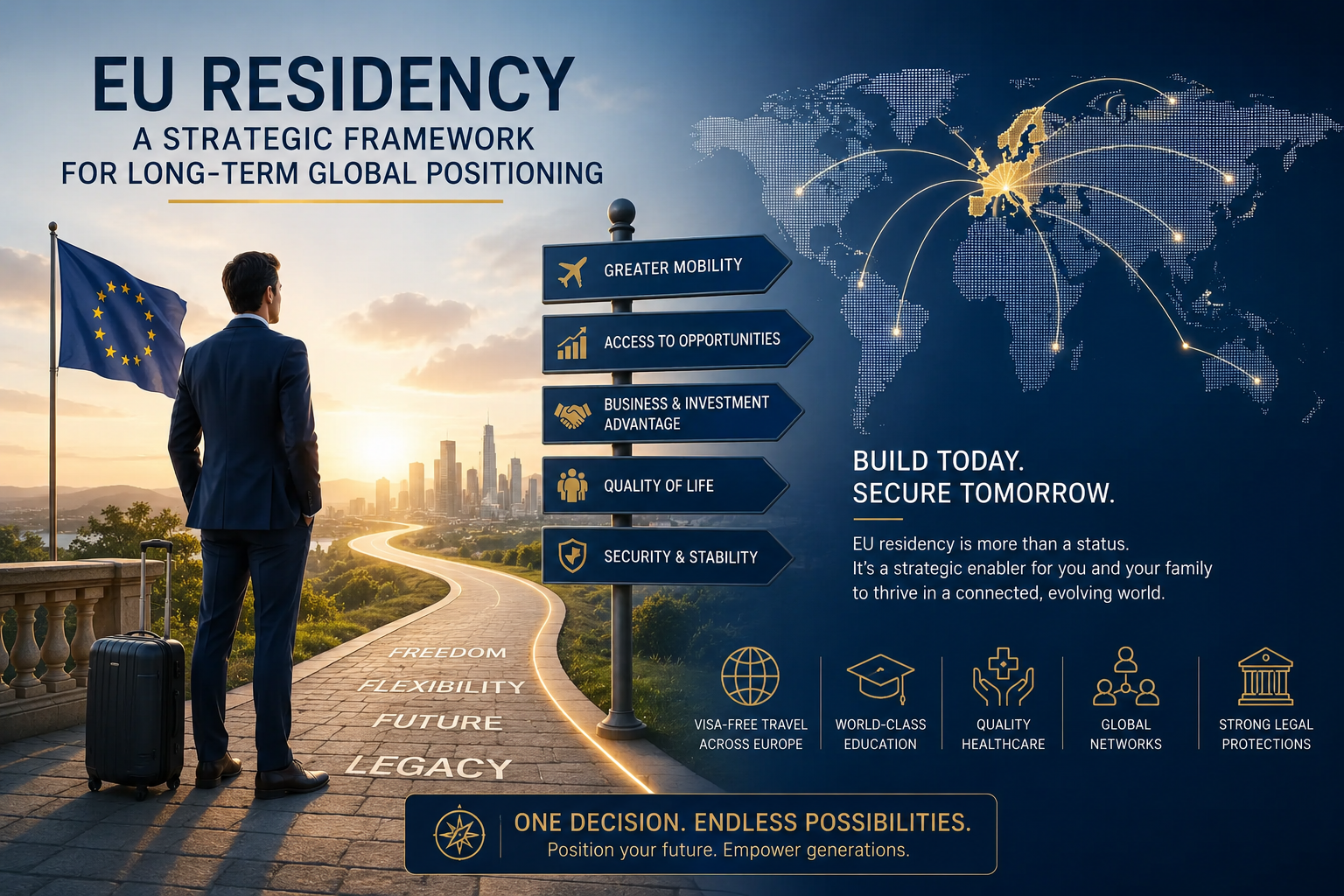
Citizenship by Investment (CBI) has become an increasingly structured pathway for globally mobile individuals and families seeking enhanced mobility, security, and long-term strategic positioning. While the concept is often discussed in simplified terms, the framework behind it is highly regulated and varies across jurisdictions.
Below are clear, detailed answers to the most frequently asked questions about CBI.
What is Citizenship by Investment (CBI)?
Citizenship by Investment is a government-approved program that allows eligible individuals to acquire citizenship of a country in exchange for a qualifying economic contribution.
These contributions typically take the form of:
Unlike traditional immigration routes, CBI does not usually require long-term employment or continuous physical residency in the country.
Do I need to live in the country to qualify?
In most Citizenship by Investment programs, physical relocation is not a requirement.
Many jurisdictions design their programs to accommodate internationally mobile individuals, meaning applicants can often complete the process without relocating or spending extended periods in the country.
However, requirements differ by jurisdiction, and applicants must always adhere to the specific conditions of the selected program.
No, they are fundamentally different.
Residency grants an individual the legal right to live in a country under specific conditions, often tied to renewals or stay requirements.
Citizenship, on the other hand, confers full national status. This typically includes:
In simple terms, residency is permission to live; citizenship is legal belonging.
Processing timelines vary depending on the country and the structure of the program.
On average, citizenship by investment applications take between 3 to 12 months to complete.
The timeline is influenced by factors such as:
Investment thresholds differ significantly across jurisdictions and program types.
In general, entry-level requirements typically start from approximately USD 100,000 and above, depending on:
Each program is structured differently, and applicants are expected to choose a route aligned with their financial and strategic goals.
Refundability depends entirely on the structure of the chosen program.
Common structures include:
Each option carries its own risk profile, liquidity expectations, and long-term return considerations.
Yes. Most Citizenship by Investment programs are designed with family inclusion in mind.
Eligible dependents typically include:
This makes CBI a multi-generational solution, allowing families to secure shared citizenship benefits under a single application structure.
Citizenship alone does not determine tax obligations.
Taxation is generally based on factors such as:
Holding a second citizenship does not automatically trigger global taxation. However, individuals are advised to consider their personalresidency and financial footprint when evaluating tax implications.
Rejections are typically not arbitrary. They are usually the result of compliance or eligibility issues uncovered during due diligence.
Common reasons include:
Given the sensitivity of these programs, strict compliance and transparency are essential throughout the application process.
Yes—Citizenship by Investment is legal when conducted through official, government-authorised programs and regulated channels.
These programs operate under strict international compliance and due diligence frameworks to ensure integrity and security. As a result,only applicants who meet the required legal, financial, and background standards are approved.
Working through legitimate channels and ensuring full documentation accuracy is essential to a successful application.
Citizenship by Investment is not merely a transaction—it is a regulated legal pathway that requires careful evaluation, proper structuring,and full compliance.
When approached correctly, it can serve as a strategic tool for global mobility, security planning, and long-term international access.